
posted 4/6/16
Antenna Adventure
This antenna adventure began in October 2004.
At that time, I was immensely pleased to receive and install my dream antenna, a 4 element SteppIr yagi. I was thrilled, and immediately started enjoying the wonders of excellent antenna performance on 40 M through 6 M. The SteppIr lives up to the reputation it enjoys. My installation is shown in Figure 1.
Figure 1
In the life of every ham, sooner or later an antenna nightmare strikes! It happened to me February 1st. 2016, 12 years after installing my SteppIr.
That day, San Diego was afflicted by a very strong rain and wind storm
. Power was lost, and rain and hail pelted the area. I was blissfully unaware of the local conditions as I was on travel.On returning I was greeted by a very strange 4 element yagi antenna configuration as you can see in Figure 2. Strange Indeed!

Figure 2
How did this happen?
Talking with a neighbor I learned that the night the storm struck San Diego, our neighborhood experienced wind gusts of up to 90 Knots! He was pleased to show me the wind data preserved by his wind data recording anemometer.
What you see when looking at a SteppIr yagi is not a metallic antenna. You are looking at an assembly of tubes, PVC if you can imagine, and inside the tubes a beryllium-copper tape much like a tape measure extends or contracts as directed by the computer controlling the SteppIR motors. The commands are based on formulae governing the electromagnetic properties that define the precise mechanical shape of a yagi antenna as specified by the desired operating frequency, set to resonate with no SWR. The ULTIMATE ham radio objective
.Thank God before going on travel I had "homed" the elements. In that condition, the metal tapes are retracted entirely into the motor housings you see at each pipe’s junction to the boom. This is a protective measure which many hams use as a means of lessening the possibility of a lightning strike. With the tapes retracted, the metallic surface of the antenna is minimized. The risk of damage mechanical damage to the beryllium-copper tapes is also minimized in the event of damage to the structure.
The PVC tubes attach to the boom at the SteppIR motor housings. The tubes insert into a slightly larger tube that forms part of the stepir motor housing. At the attachment point a rubber collar surrounds both the PVC tube and the motor housing, and it is fastened with stainless steel hose clamps
.Planning the antenna repairs I reflected on a lot of ham radio operator conversations, some factual and some likely urban legend. Much is rumored about the durability of the SteppIr yagis when exposed to the elements for a period of time. The rumors center on the perceived fragility of the PVC when exposed to the sun’s ultraviolet rays, and to rain and other natural phenomena. I wondered what I would find when I examined the antenna closely.
This antenna had been in service for 12 uneventful years, exposed to the never ending sunny skies of San Diego. When I erected the antenna, it went from the shipping containers to the tower, without any special preparations frequently rumored as necessary to prevent rapid deterioration.
Here is what I found.
Some of the PVC tubes indeed showed the ultraviolet effect on the PVC coating paint. It was flaky in some parts, and had fallen off in others allowing the exposure of the metallic mask upon which the PVC was formed. There was no penetration of the tubes. They remained integral. No cracks, or splits. See figure 3.
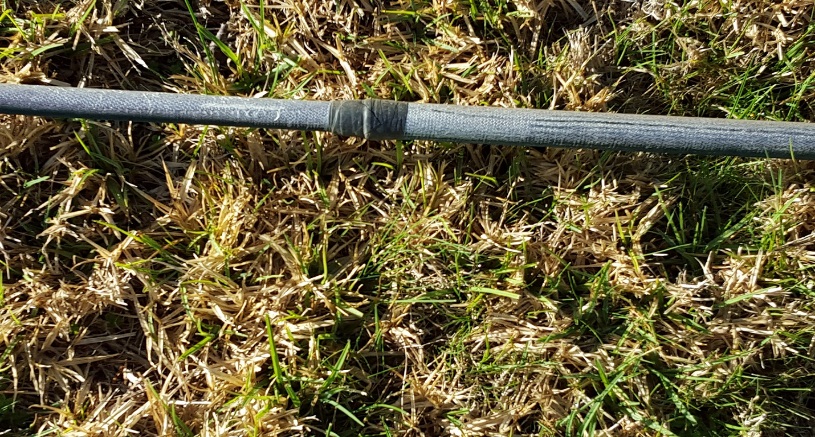
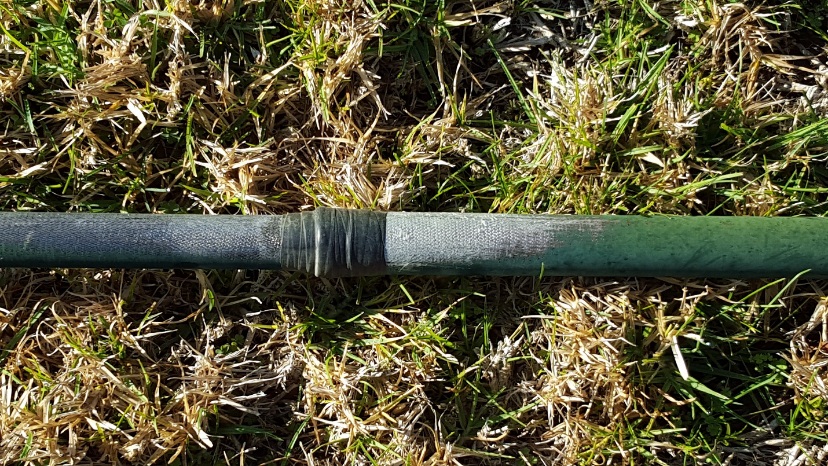
Figure 3
At the point where the PVC tube that had fallen were attached to the boom, I found the cause of the failure. Over the 12 years of exposure to the elements, the rubber boot had dried out. The long PVC tube invariably flexed slightly (up and down oscillation) in the wind and during rotation of the antenna on the mast. That motion combined with the rubber’s drying out allowed the rubber to crack very slowly over the years of exposure, ultimately failing completely. As you can see in Figure 4, it looked as if someone had taken a box cutter and ran it around the point where the PVC tube inserted into the motor fixture. Once it cracked completely, the PVC tube very slowly vibrated out of the fixture until it failed and fell.
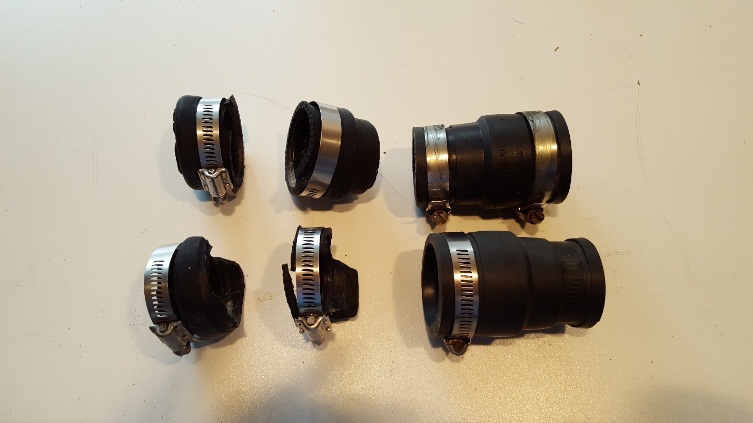
Figure 4
With the knowledge of the failure mode, I ordered a complete set of the PVC antenna replacement parts in order to refurbish all the PVC tubing, and all the rubber boots to clamp the pipes to the boom.
Figure 5 shows the material as delivered to me from SteppIr. Their service was friendly, prompt, and I felt satisfied that they took pride in the length of service I had obtained from their product
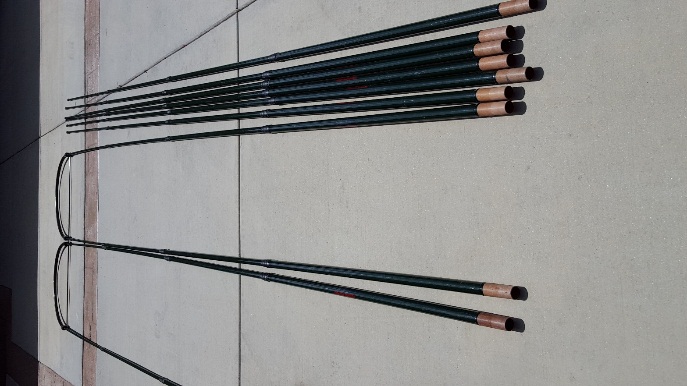
Figure 5
With KJ6ZQH’s (John) help I assembled the PVC tubes (pulling them lengthwise and applying a glue and sealing compound at the tube joints). The end product is shown in Figure 6.
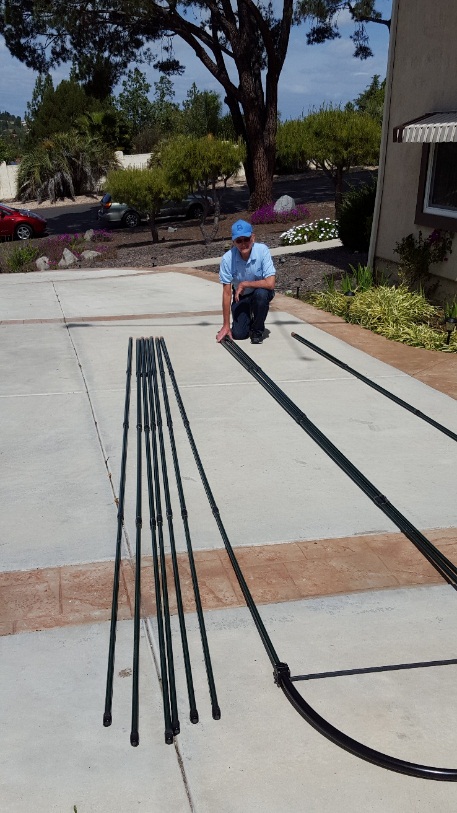
Figure 6
Figure 7 shows the arduous task we faced in restoring the antenna. The labor required was merely a case of inserting the tubes into the SteppIR motor housings, and then tightening the clamps. The figure shows KJ6ZQH relaxing from the arduous task. When I installed the crank up tower, I wanted the antenna to be at roof top level so that maintenance would be a snap. It worked! And the view from the roof top is magnificent. A perfect setting for a pleasant picnic as the sun sets on the horizon!
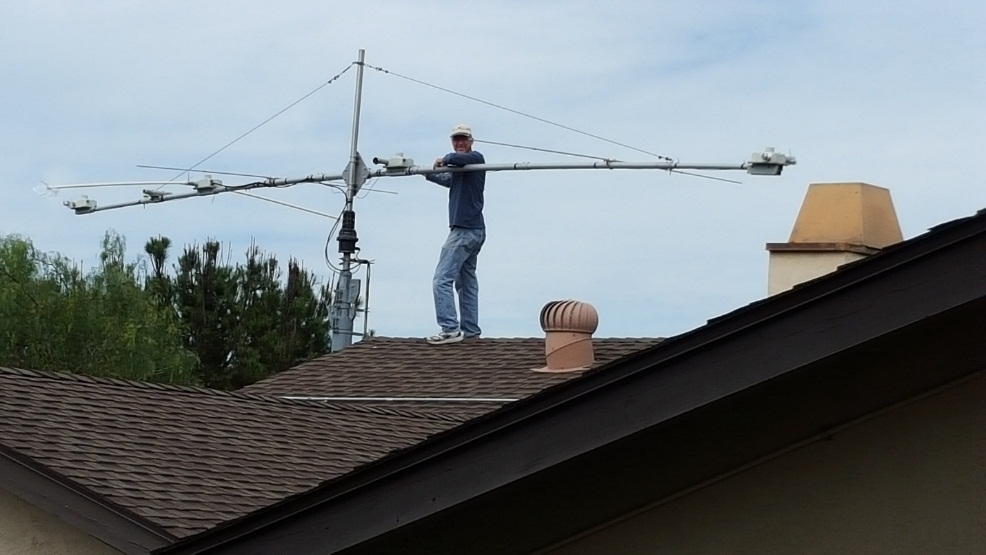
Figure 7
After about 16 hours of time from dismantling the failed antenna, receiving the new materials, and reassembling the antenna, I returned the tower to its usual height, went into the shack, turned the SteppIr control on and pushed a button to extend the elements for use on the 20 Meter band, tuned to 14.050 and was rewarded with a 0.001 SWR, and an immediate DX contact.
What a pleasure!
Figure 8 shows the completed refurbished antenna.
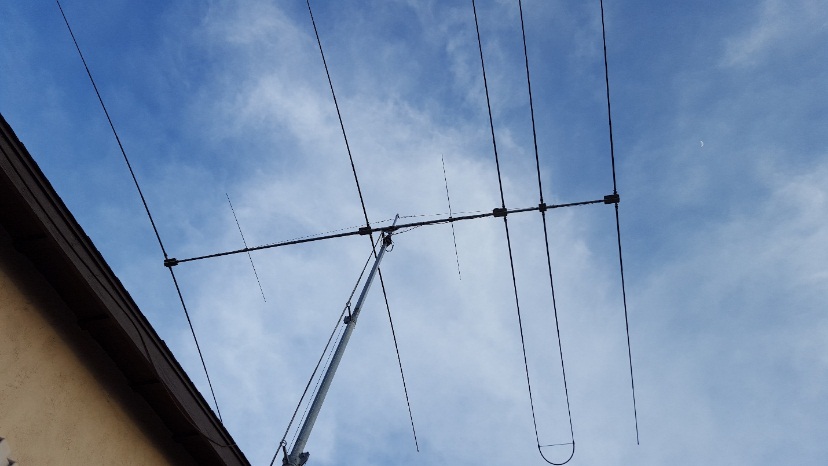
Figure 8
All in all, what appeared to be a tragic incident turned out to be an interesting opportunity to do some antenna work, some detective effort at discovering how this happened, and a small amount of labor to restore full functionality.
I remain incredibly impressed with the quality and durability of the SteppIr product. Definitely the way to go for exceptional HF operations!
And thanks to KJ6ZQH for his help in the repair.
73 de NN3V
Charlie

